

Yes, you can usually still claim car accident compensation if you were only partly to blame. Your payout is typically reduced by your share of fault, and for an injury claim under WA motor injury insurance, ICWA administers claims where the applicable compulsory third-party policy responds. Time limits are strict, so early legal advice can help you protect your right to claim.
Few people walk away from an accident knowing exactly who did what, and the other driver’s insurer may already be pointing at you. That does not automatically end your claim. Speaking with a motor vehicle accident lawyer early can help you understand where you stand before you say anything that weakens your case. Even if you were a little over the speed limit or looked away for a second, that is only one part of the picture. In this article, we cover how shared fault works in Western Australia, how it changes your payout, which evidence matters, and when to ask for legal help.
Key Takeaways
- Being partly at fault rarely ends a claim, but it can reduce what you receive.
- In WA, a non-catastrophic injury claim generally depends on establishing negligence of a driver or owner whose compulsory third party policy responds, and any fault on your part may reduce your damages.
- Insurers may argue shared fault, and you do not have to accept their version.
- Clear evidence and early advice protects your position.
What Does “Partly at Fault” Mean in the Eyes of the Law?
This type of negligence is known by the legal phrase “contributory negligence.” This is the type of negligence that applies if your own carelessness was partly responsible for the accident. The insurer or court first works out your full damages, then reduces them by your percentage of responsibility.
Common examples include:
- Driving slightly over the speed limit
- Not wearing a seatbelt
- Changing lanes without checking properly
- Driving while affected by alcohol or drugs
- Using a phone behind the wheel
Fault is rarely all or nothing. The other driver’s actions are weighed just as closely as yours.
How Does Shared Fault Change Your Car Accident Compensation?
The reduction works as a percentage. First, the total amount of your damages will be calculated, and from this amount will then be deducted the proportion of the fault on your part. The more the proportion of your fault, the more will be deducted. The amount will depend on your injury and the nature of the accident.
For major offenses like drunk driving, there may be more reductions. However, the assessment of an insurance company regarding how at fault you are may not be the end of the discussion.
Compulsory third party (CTP) insurance covers injuries, not vehicle repairs. Vehicle damage is dealt with separately, usually through comprehensive insurance or a claim against the other driver.
How Does Western Australia Treat Shared Fault?
Western Australia’s motor injury scheme is fault-based, and claims are made through ICWA, the state’s compulsory third party insurer.
| Situation | Can you claim? | What to expect |
| Another driver was wholly at fault | Yes | Your damages are assessed in full, with no reduction for your own conduct. |
| You and another driver were both at fault | Yes | Your compensation is reduced to reflect your share of the blame. |
| You were wholly at fault | Generally no | Third party insurance does not cover injuries caused by your own negligent driving. |
| Catastrophic injury, such as a spinal cord or brain injury | Yes, regardless of fault | The no-fault Catastrophic Injuries Support Scheme may provide eligible catastrophically injured people with necessary and reasonable treatment, care and support (in some cases for life) for motor vehicle accidents in WA on or after 1 July 2016. |
Rules and thresholds can change, so confirm the current position before relying on any summary, including this one.
Evidence That Helps When Fault Is Disputed
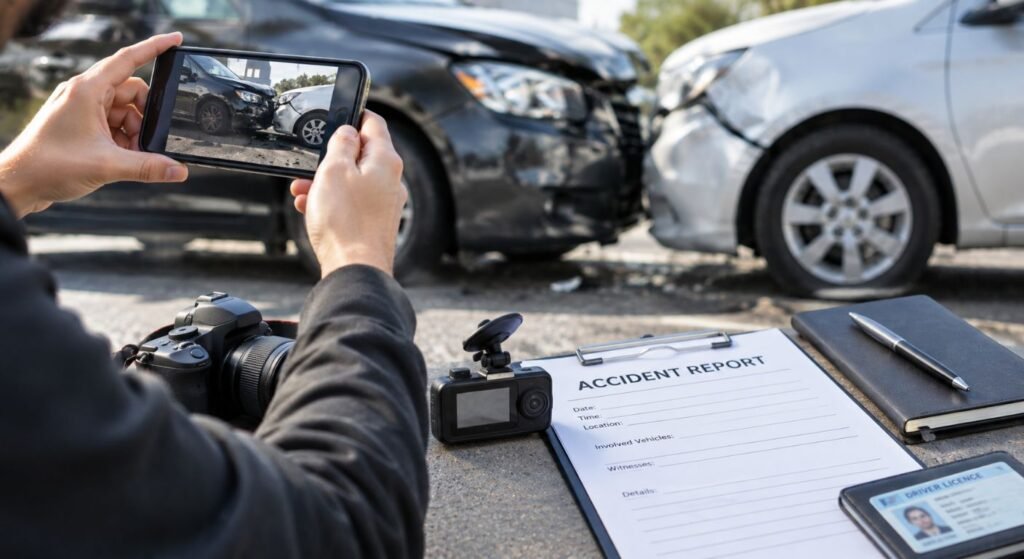
Insurers decide fault using the facts they can verify, so records made close to the time of the accident usually carry more weight than memories recalled weeks later. The more you document, the stronger your position. Keep all copies together.
- Photos of the scene, vehicle positions and road conditions
- Names and contact details of witnesses
- Dashcam or CCTV footage
- The police event number and report
- Medical records linking your injuries to the accident
If the insurer still alleges shared fault, a car crash injury lawyer can obtain reports, collect further footage and, where needed, engage an accident reconstruction expert.
What to Avoid After an Accident
Do not admit fault at the scene, even to be polite. Avoid guessing about speed or distances in statements. Do not give a recorded statement to ICWA or the relevant insurer before you understand your rights. See a doctor promptly and keep every receipt. Speak to a lawyer before you say anything about who bears the fault of the accident.
Why Speak With a Motor Vehicle Accident Lawyer Early?
Insurers often start by asking how the accident happened. Casual answers, such as “I didn’t see him coming”, can later be used to argue you carried more blame. A lawyer reviews the facts first, explains your rights under Western Australia’s scheme, and responds to the insurer for you. They also handle the paperwork, which lets you focus on your recovery.
A car accident lawyer can also tell you whether your claim is worth pursuing, what a fair percentage of fault looks like, and whether a settlement offer is reasonable. Ask about costs and fee arrangements at the start so there are no surprises.
Moving Forward After an Accident
Your fault affects the amount of money that you can get, although in most cases it will not affect your ability to pursue claims for the expenses of the treatment, loss of income, etc. The more fault there is attributed to you, the less likely you will be able to get something.
If you are unsure where you stand, a Motor Vehicle Accident Lawyer at MPK Lawyers in Perth can review your circumstances, explain how fault may apply to your claim and help you decide your next step. A short conversation can give you a clearer picture and a sensible plan for what comes next.
Frequently Asked Questions
Can I still claim if both drivers were at fault?
Possibly. In Western Australia you can still claim if another driver was partly at fault, though your payout is typically reduced by your percentage. Seek advice on your own situation.
Who decides how much fault I carry?
ICWA usually makes the first assessment. If you disagree, the percentage of fault can be negotiated with ICWA or decided by a court. Evidence plays a major role.
Should I accept the insurer’s first offer?
Not necessarily. An early offer may not reflect your full losses or may overstate your share of fault. Have a lawyer review it and explain your options before you accept.
How long do I have to make a claim?
In WA, a personal-injury action is generally subject to a three-year limitation period, but the applicable date, extensions and exceptions can differ, so speak with a car accident lawyer promptly so you do not miss a deadline.
Will a lawyer take my case if I was partly at fault?
That depends on your evidence and the circumstances of your accident. A lawyer can assess your situation and tell you honestly whether the claim is worthwhile before you decide how to proceed.
Talk to Us About Your Accident Claim Today
Book a free consultation today to find out how fault may affect your claim, what evidence you need and which deadlines apply. Get clear advice before you decide.