

ICWA investigates the crash and assesses liability on the evidence, so your claim continues. A disputed car accident claim WA is not decided by the other driver’s denial and if you disagree with ICWA’s decision, you may seek a review or start court proceedings.
Being injured in a collision is distressing enough without a dispute over who caused it. When the other driver denies fault, many people fear their claim has ended before it has begun. That is not the case. In Western Australia, injury claims are made through the Insurance Commission of Western Australia (ICWA), which investigates the collision itself rather than relying on either driver’s account alone. This article explains how ICWA assesses fault, what evidence helps, how shared responsibility affects compensation and what steps to take if liability is questioned.
Key Takeaways
- In WA, you claim through ICWA, not against the other driver personally.
- A denial from the other driver does not end your claim.
- Police reports, photos, dashcam footage and witnesses carry real weight.
- Partial blame usually reduces compensation rather than removing it.
- Time limits apply, so lodge your claim early.
What Does ICWA Do When Fault Is Denied?
Western Australia runs a compulsory third party scheme based on fault. When you are injured by a vehicle registered in WA, your claim is made against the insurance attached to that vehicle, which ICWA manages. You are not claiming against the other driver personally. Once you lodge a claim, ICWA investigates. That typically means obtaining the police report, contacting the other driver and requesting your medical records.
It then forms a view on two questions: who was at fault and what the injury is worth. The other driver’s denial is one input, but it does not decide the outcome. Catastrophic injuries are the exception. Under a separate scheme, people catastrophically injured in WA crashes receive treatment, care and support regardless of fault.
How a Disputed Car Accident Claim WA Is Decided
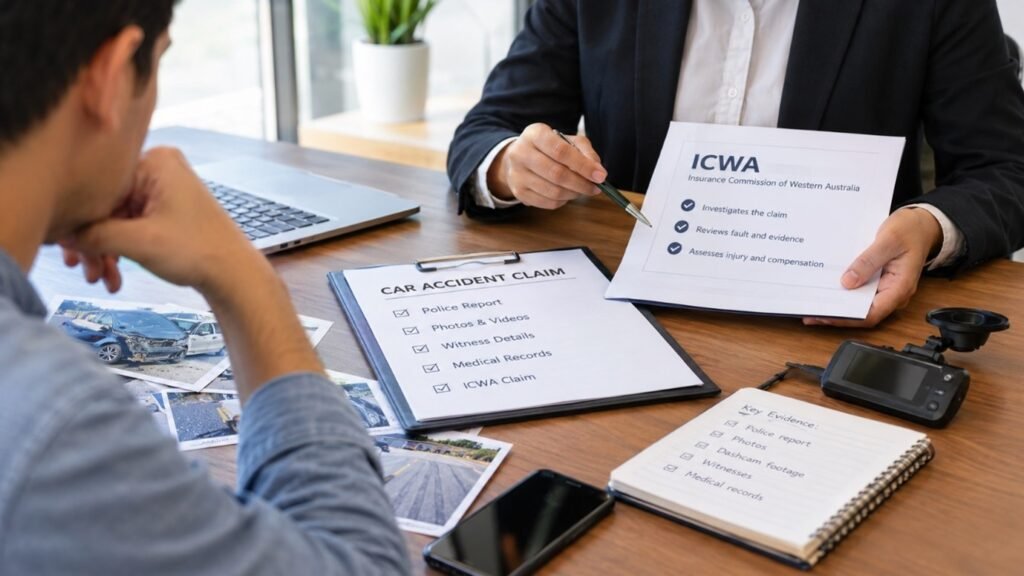
Fault comes down to negligence, which means whether a driver failed to take reasonable care. When two accounts conflict, the strength of your evidence usually matters most. Useful evidence includes:
- The police report and its reference number
- Photos of vehicle positions, damage, skid marks and road conditions
- Dashcam or CCTV footage, saved before it is overwritten
- Names and contact details of witnesses
- Medical records from your first appointment onward
A consistent account that is backed by documents is easier to rely on. Save what you can early, and keep your own description of events factual.
Can You Still Claim If You Share Some of the Blame?
Often, yes. Where responsibility is shared, car accident compensation WA is generally reduced to reflect your share rather than refused outright. This is called contributory negligence. The reduction applies to the amount payable rather than to your right to make a claim. You do not have to accept an allegation of contributory negligence without question and it can often be challenged.
What Should You Do When ICWA Disputes Liability?
An ICWA liability dispute does not close your claim and there are practical steps you can take straight away:
- Report the crash to police and keep the report number.
- See a doctor promptly so your injuries are recorded.
- Gather photos, footage and witness details.
- Lodge your claim with ICWA as soon as practicable.
- Stay courteous at the scene without stating who was at fault and be honest in every statement to ICWA.
How Can You Challenge ICWA’s Decision on Liability?
When a liability decision does not go your way, a structured response usually works best.
Step 1: Ask ICWA to explain the reasons for its decision.
Step 2: Identify any evidence that is missing or may not have been considered.
Step 3: Provide further evidence, such as footage, witness details or medical reports.
Step 4: Seek legal advice on negotiation or on starting court proceedings.
A party can also request that the case be reviewed and present more evidence. If the dispute remains unresolved, then negotiations will go on and the case will be taken to court. Many cases end in negotiations without going to court.
Which Time Limits Apply to Your Claim?
Court action for a personal injury generally must start within three years of when you became aware of the injury, which is usually the crash date. Courts can extend that period in some circumstances, but you should not rely on it.
Other time limits are worth knowing about:
- Making the claim: ICWA states that a claim should be made as soon as practicable after the crash.
- Catastrophic injury support: an application to join the scheme must generally be made within three years of the accident.
- Children: different rules apply to people under 18.
How Can a Lawyer Help With a Fault Dispute?
A motor vehicle injury claim dispute often turns on small details, such as how a statement is worded or whether a medical history is complete. A lawyer can gather evidence, respond to ICWA and challenge a fault allegation, while you focus on recovery.
In practice, legal support can include:
- Reviewing your evidence and identifying any gaps
- Advising you before you give a formal statement
- Assessing any suggestion that you share responsibility
- Negotiating with ICWA on your behalf
- Explaining your options and time limits in plain language
Conclusion: Protecting Your Claim When Fault Is Disputed
A disputed car accident claim WA may be a daunting process, but it does not mean that your claim will end up being denied. You can report the accident, go to the doctor, preserve your evidence, and make your claim before time. Every case regarding the determination of fault is different, and the result will depend on the weight of evidence and consistency of your claim. Maintaining organized documents and reacting calmly to every accusation will enable you to address ICWA’s queries effectively.
If the other driver blames you or ICWA questions liability, MPK Lawyers can review your situation in a free first consultation and explain your options in plain language.
FAQs
What if the other driver refuses to admit fault?
Can I claim car accident compensation WA if I was partly at fault?
How long do I have to make a claim?
Do I have to sue the other driver personally?
Do I need a lawyer for a motor vehicle injury claim dispute?
Not Sure Where You Stand on Fault?
Book a free consultation with a Perth car accident lawyer. Tell us what happened, share your evidence and find out how to respond if ICWA questions who was at fault.